


Women's health is not a niche — it is a lifespan defined by transition. From adolescence through the reproductive years, into the seismic shifts of perimenopause and menopause — a woman's biology is never static, and each transition carries its own clinical complexity. Yet this is precisely where both conventional medicine and functional approaches too often fail women: one handing her a diagnosis that explains little and offering solely pharmacological or surgical solutions; the other too frequently reaching for expensive testing panels in place of clinical reasoning, or retreating into reductive narratives — like oestrogen dominance — that flatten the extraordinary complexity of women's hormonal biology into a single, often misleading frame.
- FULLY BOOKED -
For many of you, something else sits beneath all of this. A quiet frustration that the frameworks you were trained in — medical or functional — are not holding up against the reality of the women you see in practice. And a particular kind of clinical exhaustion that comes not from the complexity itself, but from carrying it alone.
You have seen it repeatedly: women with chronic pelvic pain cycling through interventions without resolution; PMDD reduced to a progesterone sensitivity narrative; peri-menopausal shifts in metabolism and mood met with hormone therapy offered as a single lever in a system of extraordinary complexity. We are stuck in clinical loops and linear thinking — and it is time to step out of them.
The Women's Health Practicum is curated to break those loops and welcome a genuinely new paradigm of women's health care. The morning is devoted entirely to PMDD: the condition that, in my experience, generates more clinical confusion, more reductive treatment, and more unmet need than almost anything else in women's health. When a woman finally receives a PMDD diagnosis, she deserves so much more than "it's just your hormones." She deserves a practitioner who understands that her hormones are simply one part of a cyclical collision — an intricate interplay between neurotransmitter systems, the endocannabinoid system, environmental amplifiers, and individual genetic vulnerabilities.
I'll be introducing you to the most current clinical framework available for understanding this condition — what I have named the PMDD Wheel of Misfortune. This map is immense. I have been refining it year on year as the research evolves, and it sits at the centre of everything I now teach on this topic.
From there we move into the realities of chronic pelvic pain, endometriosis, adenomyosis, and central sensitisation. And then, crucially, we turn the lens inward. Peta and I will open our own kit bags: the tools, clinical frameworks, and practices we actually use — with an invitation to bring that same quality of attention to your own health and your own practice!
This is not just another lecture — it is a rich clinical conversation: evidence-grounded, honest, and curated to change how you think and practise!
A day I genuinely don't believe exists anywhere else for practitioners in this space.
Tanya x
Raising The Bar in Serving Women’s Health
The PMDD wheel of misfortune

The Women’s Health Practicum
MORNING: PMDD - THE WHEEL OF MISFORTUNE MODEL
9.30am - Arrival & welcome refreshments
Organic coffee, fresh herbal teas, & time to settle with views across the coast
10-11.45am: PMDD & The Architecture of Female Hormonal Health with Tanya Borowski
The morning's anchor session — and a direct challenge to how hormonal health, and PMDD in particular, is currently being approached in both conventional and functional practice.
We open with a question that should sit uncomfortably: why, in 2026, are women with PMDD still being handed an SSRI or OCP and told to come back in three months? The answer lies not in a lack of research, but in a clinical framework that is not keeping pace with it — and, too often, a functional alternative that replaces one reductive approach with another: expensive testing panels that add little to clinical decision-making in place of the forensic, pattern-based serum reasoning that actually moves the needle. This session exists to change that..
The foundation is the HPO axis — but not as an endocrinology primer. We work through it as a hierarchy of communication: GnRH and the dopaminergic signalling that regulates it, through LH, FSH and prolactin, down to oestrogen, progesterone and its neurosteroid metabolite allopregnanolone. Because these are not simply reproductive hormones. They are powerful modulators of dopamine, serotonin, histamine and GABA across the entire cycle — and how your client feels, thinks, behaves and responds to stress at any given point is inseparable from where she is within that architecture.
From there we build the full picture of PMDD using the DASH-MC framework — one of the most important recent contributions to our understanding of hormonal sensitivity and psychopathology — mapping three distinct windows of neuroendocrine vulnerability across the cycle. We layer in the endocannabinoid system and its often-overlooked role in cyclical mood dysregulation. And we interrogate individual response: why two women with identical hormone levels can have completely different presentations. The answer lies in genetic variants across neurotransmitter pathways, steroid-metabolising enzymes and receptor sensitivity — and this is where nutrigenomics stops being an add-on and becomes central to the clinical picture.
We cut through the noise on testing strategy — where gold-standard NHS pathology outperforms functional alternatives, where nutrigenomic testing genuinely adds clinical value, and how to build a sequenced, proportionate approach you can stand behind.
You will leave with:
A working framework of the HPO axis and its key hormones: roles, patterns, and what test results actually tell you in clinical context
Confidence in when and what markers to testing in the context of cycle phase and life stage
Fluency in the neuroendocrine interplay between ovarian hormones and neurotransmitter systems — and why this changes everything about how we interpret hormonal presentations
An understanding of how genetic variants in neurotransmitter and steroid-metabolising pathways shape individual hormonal sensitivity, and where nutrigenomic testing earns its place in the clinical sequence
A clinical map of the endocannabinoid system and its role in cyclical mood dysregulation
Beautifully presented handouts as clinical tools for your clinical practice
11.45-12.15pm: Mid-Morning Break
Organic coffee, fresh herbal teas & healthy snack on the deck
MID-MORNING: CHRONIC PELVIC PAIN - The Next Frontier
12.15-1.30pm: Psychoneurological Immune loop of Endo & Chronic Pelvic Pain
with Dr Peta Wright — integrative gynaecologist
Women with chronic pelvic pain are among the most underserved in the medical system — and often among the most exhausted by the time they reach your clinic. They have been investigated, managed, and discharged. They have been told their pain is normal, or that nothing more can be done. And yet they are still suffering.
The problem is rarely the patient. It is the model.
Because chronic pelvic pain is not simply a tissue problem. Endometriosis, adenomyosis, interstitial cystitis, central sensitisation — these conditions share a common thread that conventional gynaecology has been slow to acknowledge: the profound role of nervous system dysregulation, unprocessed trauma, and the body's own protective responses. Layers that most practitioners have never been taught to recognise, let alone work with.
In this session, Dr Peta Wright — integrative gynaecologist and one of Australia's leading voices in whole-person pelvic pain care — brings her clinical framework to the practicum. How to assess complexity without being overwhelmed by it. How to work alongside medical management rather than around it. And how to hold space for women whose pain has been dismissed, minimised, or medicalised without ever being truly understood.
You will leave with:
A clinical framework for assessing and approaching chronic pelvic pain across endo, adenomyosis, IC, and central sensitisation
An understanding of the nervous system's role in pelvic pain — and how to begin working with it
Practical guidance on collaborating with medical management rather than working in isolation
Communication approaches that build trust with women whose pain has been repeatedly dismissed — and how to hold that space without taking it on
1.30-2.30pm - Lunch: plant-based and locally sourced
Connect with speakers, colleagues & sponsors — overlooking the sea, which will do the rest 😘
SPONSORED BY AMRITA NUTRITION + SANNO HEALTH
AFTERNOON: ROOTS & SIGNALS; How to Enhance Client Interactions and Outcomes
2.30-3.25pm: The Invisible Environment: Light, Frequency & the Neuro-Immune-Endocrine Axis
with Rachel Jessey
The morning has mapped the internal architecture — hormonal, neuroendocrine, nutrigenomic. Now we turn to the question most clinical frameworks never address, how is the environment shaping it?
Your client's biology does not exist in a vacuum. It exists in a world of artificial light, electromagnetic fields, and an almost total disconnection from the natural signals that her neuro-immune-endocrine axis evolved to receive. And for women already navigating hormonal sensitivity, cyclical mood dysregulation, or chronic pelvic pain, that invisible load may be far more clinically significant than we have been trained to recognise.
Rachel Jessey brings her clinical framework to the practicum — drawing on nutrition, biophysics, quantum biology, and circadian biology to support the body's natural healing abilities. Expect practical, proportionate guidance on light spectrum, EMF exposure, and structured water that practitioners can translate directly into client care.
You will leave with:
An understanding of light as biological information — how spectrum and timing drive circadian signalling, cortisol and melatonin rhythmicity, and downstream hormonal patterning
Confidence in counselling clients on light integration across the day: morning exposure, evening environment, screen mitigation, and seasonal considerations
A clear, non-alarmist framework for discussing EMF exposure and its interface with nervous system and immune regulation
A live demonstration of structured water and how Rachel introduces this in practice
A beautifully presented one-page clinical handout covering light spectrum protocols, EMF harm reduction, and structured water guidance — ready to use with clients immediately
3.30-4.25pm: The practitioner audit: tools, practices & wellbeing for the client & clinician
with Tanya Borowski + Dr Peta Wright
We open with the question that shapes everything that follows: how do we actually frame a case? How do we order our thinking, prioritise interventions, and decide where to begin when the presentation is complex and the woman in front of us is exhausted? Nervous system regulation is not an afterthought here — it is the thread that runs through the entire clinical structure, informing how we interpret symptoms, sequence support, and build a framework that holds.
Tanya and Peta then open their own kit bags — the tools, practices, and frameworks they actually use to support their own hormonal health, nervous system regulation, and sustainable clinical practice. No performance, no perfection. Just honesty about what works, and why. Rachel's environmental lens woven through — because the world your client lives in is part of the case.
The session moves into live case work, welcoming your questions throughout. Two cases will be worked through together — a collaborative, open format that reflects the kind of clinical thinking that lecture-style learning simply cannot replicate. Sitting with complexity in real time, hearing how experienced clinicians reason through uncertainty, recognising your own clients in the room: this is where integration happens.
The afternoon closes with a guided breathwork practice — a lived demonstration of one of the most accessible and evidence-based nervous system tools available to both practitioners and clients.
4.30 - 5pm: Expert Panel
A rare opportunity to put your questions directly to some of the sharpest minds in women's health, nutrigenomics, and neuro-immune-endocrine medicine - this is literal gold!
with Tanya Borowski, Dr Peta Wright, Rachel Jessey, Emma Beswick, Tracey Randell + more TBA


5pm: Goodie bags & carriages

Gynaecologist | Paediatric & Adolescent Gynaecologist | Fertility Specialist. | MBBS MRMed FRANZCOG | Founder, Vera Wellness
Dr Peta Wright has a relaxed and compassionate attitude that will put you at ease knowing you’re in capable, caring hands. She is a gynaecologist, paediatric & adolescent gynaecologist, and fertility specialist.
Peta is deeply committed to all aspects of women’s health care and founded Vera Wellness in 2020. She strives to take a wholistic approach to managing the health concerns of women of all ages. Peta has a particular interest and expertise in the areas of paediatric and adolescent gynaecology, having completed a fellowship in adolescent gynaecology in 2013.
Peta is the author of Healing Pelvic Pain, published in 2023, a book about transforming the trauma of period pain, endometriosis and chronic pelvic distress. She aims to empower women to ask the right questions, get the right treatment, and make lifestyle changes that bring about release from pain.
Location | Date | Cost
- FULLY BOOKED -
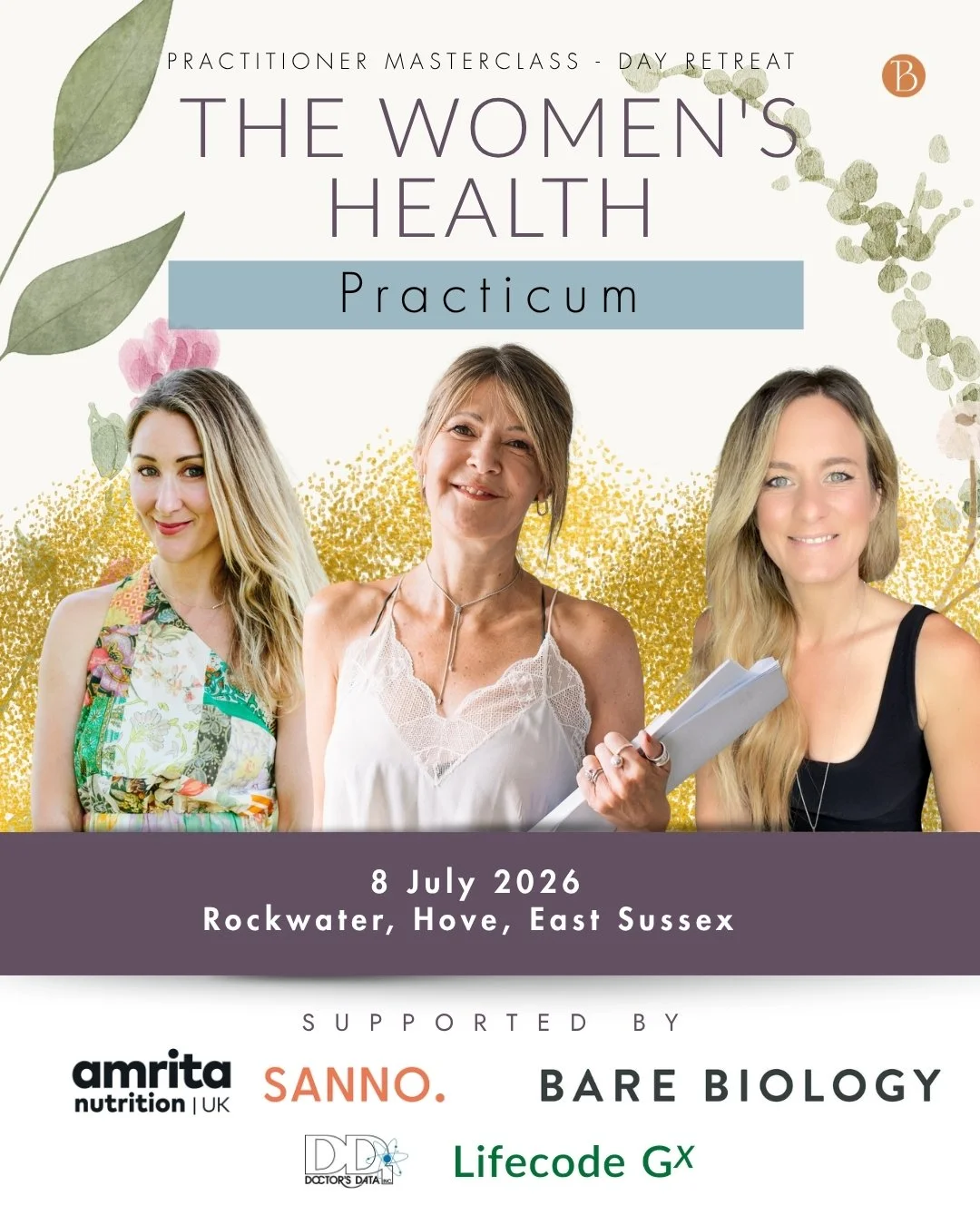
Wednesday 8th July 10am - 5pm
This educational packed day takes place at the breathtaking location of The Roof Terrace - Rockwater, nestled right by the water, in Hove, East Sussex
I have specifically chosen this venue to curate an event away from a dreary traditional hotel conference room, allowing us all to immerse ourselves in nature with the opportunity for you to interact with the panelists, presenters and sponsors while sparking cognitive pathways with inspiring and engaging knowledge to be able to then implement with your clients once back in clinic.
Directions
CAR: Rockwater Hove, Western Esplanade, Brighton and Hove, Hove BN3 4FA | There is no dedicated on-site parking. But there’s paid for on-street parking on Kingsway, the Main Street which Rockwater is just set back from.
TRAIN: Direct London services can be had to Hove or Brighton
TAXIS: Can easily be picked up form Hove or Brighton stations
book here
What’s included
Fully referenced slide deck
Delicious plant based lunch and refreshments throughout the day
6 hours CPD (in application)
Tanya Borowski goodie bag with treats & delights, including signed copy Peta’s book - Healing Pelvic Pain